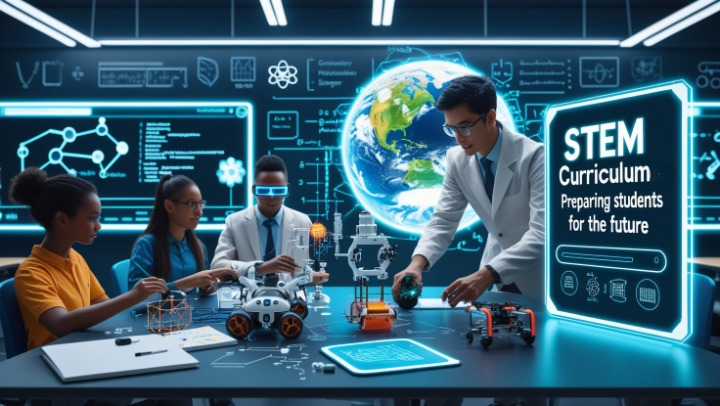
STEM stands for Science, Technology, Engineering, and Mathematics. These four subjects together form a curriculum that not only provides theoretical knowledge to students but also prepares them to solve real-world problems. In today’s digital and rapidly changing world, STEM education has become very important. In every field, be it healthcare, IT, or manufacturing, there is a growing demand for technology and logical thinking. Therefore, today’s students should not only know how to cram, but they should also have the ability to think, analyse, and find new solutions. STEM develops this skill set.
Nowadays, the job market is changing very fast. In such a situation, if students are not prepared for the future, they will lag in the competition. STEM subjects promote innovation and creativity in students. When a student tests his idea in an experiment or designs a solution in a coding project, he is not just getting marks; he is getting closer to becoming a real engineer or scientist.
STEM education is also important because it gives equal opportunity to everyone, irrespective of gender and background, to grow. STEM is a powerful platform for girls, low-income students, and learners from rural areas from where they can make their future brighter.
Core Elements of a STEM Curriculum:
STEM curriculum includes four important subjects: Science, Technology, Engineering, and Mathematics. But these subjects are not taught separately; they are integrated into a system where students learn these subjects through real-life problems. The focus of STEM is not on routine learning or just theory; rather, it is on practical application. This curriculum teaches students to use problem-solving, critical thinking, collaboration, and creativity.
Science helps students understand natural phenomena, technology teaches them to use digital tools and software, engineering teaches them how to design and build structures, and mathematics connects them all through logic and calculations. When these four come together, students develop a well-rounded skill set that prepares them for the future.
A STEM classroom is quite different from traditional classrooms. There are group projects, labs, and sometimes coding and robotics are used. All of these things give students a real-world environment where they work independently and in a team.
Such a curriculum not only leads to academic excellence in students but also builds their personality and confidence. When a student finds a solution to a problem on his own, he develops a sense of leadership and ownership. The main goal of STEM is that students work not just for marks but for learning and innovation.
The Role of STEM in Career Readiness:
The biggest advantage of STEM education is that it prepares students for careers that will be in the highest demand in the future. Fields such as robotics, artificial intelligence, data science, renewable energy, and biotechnology are growing rapidly today. These are all STEM-related careers that require not just theory but practical knowledge and innovative thinking.
When students learn STEM subjects, they develop problem-solving and analytical thinking along with technical skills. These skills enable them to face every challenge during their career. For example, a student with an engineering background can work in many areas of manufacturing, construction, and design. Similarly, a student interested in technology may choose fields such as programming, software development, or cybersecurity.
Employers today are looking for employees who can think independently, come up with new ideas, and have the ability to implement them. STEM education instills all of these traits in students. This curriculum also strengthens students’ soft skills such as teamwork, time management, and communication.
Career readiness does not only mean getting a job, but it means that you become a valuable employee whom every company wants to hire. STEM makes you this way. If you develop these skills at the school level itself, then you can be successful in any field in professional life.
Incorporating Real-World Applications in STEM Learning:
The most powerful aspect of STEM learning is that it links theoretical knowledge with real-world applications. This means that whatever students learn in the classroom, they apply it to real-life problems. When a student does a science experiment or completes a coding project, he or she is not just earning marks but thinking about how these skills will be used in the future.
This learning style is quite different from traditional rote learning. There are hands-on projects, design thinking is used, and many students even collaborate with industry experts. For example, if students have a project to design a solar panel, they create practical solutions by understanding topics on energy conservation, engineering, and environmental impact.
This kind of practical learning approach boosts their creativity and critical thinking. When students work on a project, they also get experience in planning, budgeting, testing, and receiving feedback. All these things make them mature and responsible learners.
The integration of real-world applications is not only a means of imparting knowledge but also a source of motivation. When students see that their work is solving a real issue, their confidence increases and they start taking more interest in learning. This practical side of STEM learning prepares them for complex problems of the future.
Challenges in Implementing STEM Education:
As powerful as STEM education is, implementing it in schools is equally challenging. The first challenge is a lack of resources. Many schools do not have proper labs, updated computers, or modern tools to provide practical STEM learning to students.
Another issue is a lack of trained teachers. STEM teaching is very different from traditional teaching. In this, teachers have to use new techniques and cross-disciplinary learning methods. If they do not get proper training, they cannot provide effective STEM education to students.
The third challenge is uneven access. Urban schools have better facilities, but in rural or low-income areas, students face many obstacles in accessing STEM education. This causes students from these areas to lag in competition.
Another important challenge is the gender gap. Girls have less participation in STEM fields, especially in technology and engineering fields. Early exposure, mentorship programs, and encouragement are very important to reduce this gap.
Despite all these challenges, the future of STEM education is bright if schools, government, and community come together to find solutions to these problems. Every student should get this opportunity to secure their future through innovation and creativity.
Conclusion:
Today is an era of rapid change where technology and science have become an essential part of every field. In such a situation, STEM education has become not just an option but a necessity. If we want our next generation to not just survive but achieve something in it, then we have to give them such tools and knowledge that prepare them for the real world. The STEM curriculum is based on this idea.
When students learn skills like critical thinking, problem-solving, and creativity, they create new paths for themselves. STEM enables them not only to get jobs but also to create new careers. This education makes them self-reliant, tech-savvy, and socially aware.
It is very important for us to make STEM accessible to every school, every area, and every student. This will secure not just their future but that of our country too. If we invest today, tomorrow we will get a generation that can find solutions to every problem. This is the real purpose of STEM education: to create a future-ready generation.
FAQs:
- What does STEM stand for, and why is it important?
STEM stands for Science, Technology, Engineering, and Mathematics. It is important because it helps students develop critical thinking, problem-solving, and innovation skills that are essential in today’s fast-changing world. STEM prepares students to handle real-world challenges and succeed in high-demand careers. - How is the STEM curriculum different from traditional education?
STEM curriculum focuses on integrated learning where science, technology, engineering, and math are taught through real-life problems and practical applications. Unlike traditional rote learning, STEM uses hands-on projects, collaboration, and creative thinking to make learning more meaningful and future-focused. - What career opportunities can STEM education lead to?
STEM education opens doors to careers in robotics, artificial intelligence, data science, renewable energy, biotechnology, and more. These fields require practical knowledge and innovation. STEM also enhances soft skills like teamwork and communication, making students more job-ready and competitive in the workforce. - How does STEM learning include real-world applications?
STEM connects classroom lessons to real-world challenges. For example, students may build a model of a solar panel or design an app to solve a problem. This project-based learning helps them understand the value of what they learn and builds skills like budgeting, testing, and teamwork. - What are the challenges in implementing STEM education in schools?
STEM education faces challenges like lack of resources, untrained teachers, unequal access in rural areas, and a gender gap, especially in fields like engineering and tech. To overcome these, schools need better funding, teacher training, and inclusive programs that promote STEM for all students.