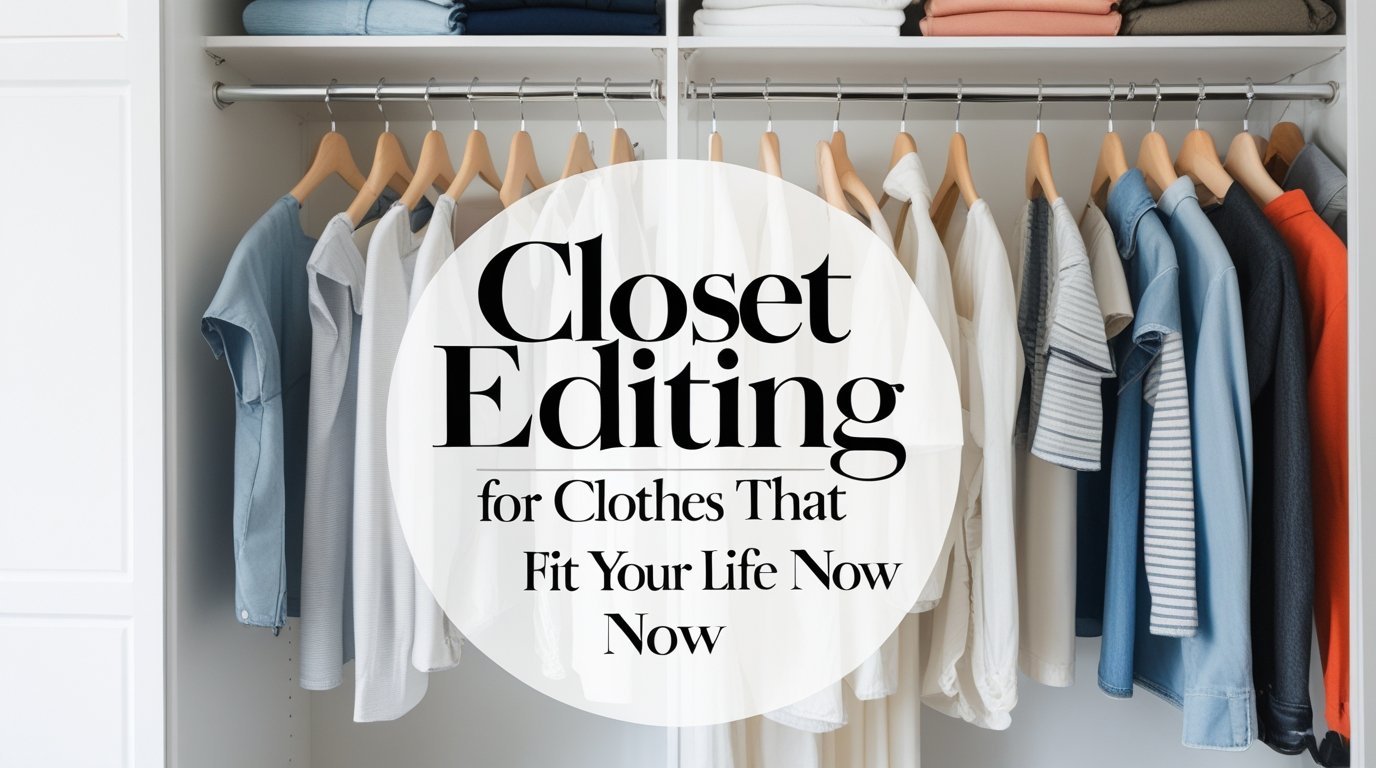
I had a closet full of clothes and a daily uniform of leggings and a fraying t-shirt. Sound familiar? The breaking point wasn’t the mess; it was the emotional tax. Every morning, I’d face a sea of fabric that whispered accusations: “Remember when you wore this?” “You spent how much on that?” “Someday, maybe…” I was living in a museum of my past selves, the corporate self, the going-out self, the aspirational self, while my actual, present self had nothing to wear. I wasn’t managing a wardrobe; I was curating a collection of ghosts. The edit that changed everything wasn’t about minimalism; it was about truth. I had to make my closet reflect the woman I am now, not the woman I used to be or the woman I hoped to become.
The Permission Slip: Why “Someday” is a Lie:
We all have them. The jeans that are one size too small, the cocktail dress from a wedding five years ago, the expensive blazer from a job you left. We hold onto them as promises to a future version of ourselves. I call it “Someday Syndrome.”
My edit started with a single, brutal question for every item: “Does this fit the body and life I have today?” Not five pounds from now. Not if I get invited to a gala. Not if I go back to an office. Today.
That sequined top? My life has zero spontaneous galas. Into the donate pile. The pencil skirts from my finance job? I work from home in a creative field. They were costumes. The stiff, high-heeled boots I bought were “chic,” but they murdered my feet. They weren’t chic on me; they were instruments of torture. Letting them go wasn’t a failure; it was a contract with reality. It was permitting myself to dress for the life I actually live, not the one I think I should be living.
The Lifestyle Categories: Your Personal Blueprint:
Once I cleared the “someday” items, I saw the skeleton of my real life. I identified my core Lifestyle Categories. Yours will be unique to you.
For me, they are:
- Home & Errands: Comfortable, presentable, easy-care clothes for daily life (great jeans, soft tees, sweaters, leggings).
- Creative Work (from home): Pieces that make me feel focused and put-together on Zoom and in my own head (interesting knitwear, structured tops, nice joggers).
- Weekend Social: The step-up from errands, clothes for brunch, a museum visit, a casual dinner (elevated tops, nice denim, casual dresses).
- Active & Outdoor: Leggings, performance tops, hiking gear, and a warm layer that isn’t a ratty sweatshirt.
I had zero categories for “corporate boardroom” or “black-tie event.” And that was okay. My closet needed to be weighted accordingly: 40% Home/Errands, 30% Creative Work, 20% Weekend Social, 10% Active. I started evaluating every item by its category fit.
The Three-Part Test: Feel, Fit, Frequency:
With my categories defined, I developed a ruthless triage system for each item. It has to pass all three.
1. The Feel Test (The Most Important): When I put this on, how do I feel? Not “how do I look?” but how do I feel? Do I feel confident, comfortable, and like myself? Or do I feel stiff, anxious, or like I’m playing dress-up? That beautiful but itchy wool sweater failed. The silk camisole that made me stand taller passed with flying colors. Emotional response is data. Trust it.
2. The Fit Test (Be Honest): Does it fit my body right now? Not “it zips.” Does it fit comfortably, flatteringly, and functionally? I stopped keeping “goal pants.” I kept pants that fit. Clothes that fight your body make you feel at war with yourself. Clothes that fit make you feel at home.
3. The Frequency Test (Be Realistic): When was the last time I wore this? In the past year? If I haven’t reached for it in 12 months, with all seasons and occasions passing by, I never will. The exception is true sentimental items (your wedding dress, a concert tee), which get a dedicated, limited memory box, not valuable closet real estate.
The “Why” Behind the Keepers: Building a Cohesive Story:
As I pared down, a style narrative emerged from the “keep” pile. I noticed everything that stayed was soft, textured, and in a palette of earthy neutrals with shots of rust and forest green. The items that went were stiff, synthetic, or in colors I thought I “should” wear (like bright pink).
My closet was telling me who I was: someone who valued comfort, natural materials, and a calm, grounded aesthetic. My editing job was now to listen and build on that story. I made a list of what was missing: a perfect, heavyweight black t-shirt for my Home category. A better-fitting pair of trousers for my Creative Work category. A go-to sweater dress for my Weekend Social category.
Shopping, once a compulsive hobby, became a targeted mission. I wasn’t buying a “cute top”; I was sourcing a specific piece for a defined role in my life.
The One-In, One-Out Rule & Seasonal Audits:
The edit isn’t a one-time purge. It’s a practice. I instituted two rules:
The One-In, One-Out Rule: If a new item comes in, an old one must leave. This forces conscious consumption. Buy a new sweater? Which old sweater has served its purpose? This keeps the closet from creeping back into chaos.
The Bi-Annual Seasonal Flip: In spring and fall, I do a quick, category-by-category review. I try on everything. Does it still pass the Three-Part Test? Has my lifestyle shifted? This 60-minute refresh prevents another massive, overwhelming overhaul.
The Liberation of a True Closet:
The result was nothing short of liberation. My closet is now quiet, cohesive, and entirely usable. Getting dressed takes seconds because every option is a good option. The mental energy I spent on wardrobe angst is now freed up. I feel a sense of integrity when I open the doors; what’s in there is an honest reflection of me.
Letting go of the past and the fantasy wasn’t a loss; it was making space for reality. My clothes now fit my life, and in turn, I finally feel comfortable in my own skin every single day. The goal isn’t a perfect capsule wardrobe; it’s a truthful one.
The Final Edit:
Closet editing is the most practical form of self-care I’ve ever practiced. It’s not about having fewer things; it’s about having the right things, pieces that honor your present body, serve your actual life, and make you feel authentically like yourself. When your closet only contains clothes that fit your life now, you stop dressing for a phantom and start dressing for the person you are, which is always more than enough.
FAQs:
1. What’s the first step if my closet overwhelms me?
Pull out only the clothes you’ve actually worn and loved in the last three months—this is the core of your real wardrobe.
2. How do I handle expensive items I never wear?
Sell them; their value is in funding clothes you’ll actually wear, not in gathering dust as a guilt-inducing monument to a bad purchase.
3. What if my lifestyle is in transition?
Edit for the lifestyle you have 80% of the time right now, and keep a tiny, practical capsule for the other 20%.
4. Is it okay to keep sentimental items?
Yes, but store them neatly in a memory box, not your daily closet, where they cause clutter and guilt.
5. How often should I do a major edit?
Start with one big, ruthless edit, then maintain it with smaller seasonal check-ins every six months.
6. What if I regret getting rid of something?
True regret is extremely rare; the feeling of daily clarity and ease will far outweigh the loss of one specific item.